Topic 9: Mulching Coffee Trees
Video
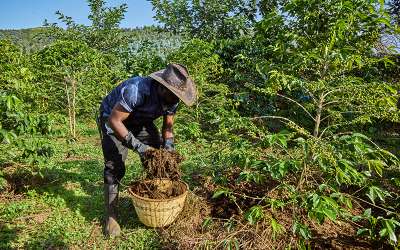
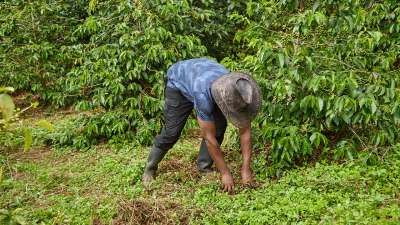
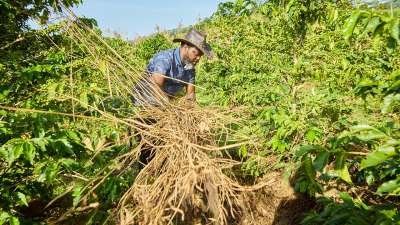
This topic highlights the importance of mulching as a key soil management practice in coffee farming. Mulching involves covering the soil surface with organic materials such as grass, maize or sorghum stems, banana residues, bean husks, or rice husks to protect and improve the soil. Mulch helps retain soil moisture by reducing evaporation, prevents erosion caused by heavy rainfall, and improves water infiltration to support strong root development. As organic materials decompose, they enrich the soil with nutrients and organic matter, enhancing long-term fertility. Mulching also suppresses weeds and reduces the spread of certain soil-borne diseases. When nitrogen-fixing cover crops are used as mulch, they further improve soil fertility.
To maximize benefits, mulch should be applied before the soil becomes too dry and after manure or fertilizer application to prevent nutrient loss. Always leave a small gap between the mulch and the tree trunk to avoid termite damage. Proper mulching protects soil health, strengthens coffee trees, and supports higher yields.
Audios
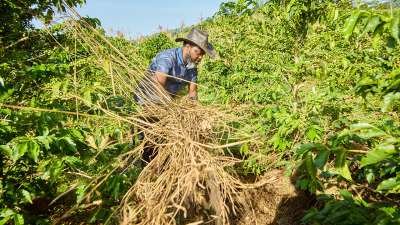
Chapter 1. Introduction
Introduces mulching as a soil protection practice supporting moisture conservation and fertility....
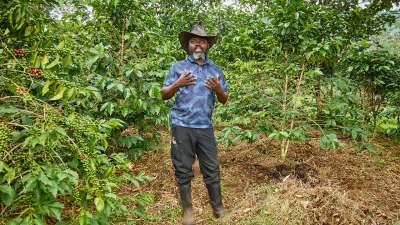
Chapter 2. Benefits of Mulching
Highlights erosion prevention, moisture retention, weed suppression, and nutrient improvement.

Chapter 3. Best Time to Mulch and How to Mulch
Explains proper timing, placement, and trunk clearance techniques for effective mulching.